ZenCortex edges ahead for most tinnitus sufferers in 2026 — stronger antioxidant coverage of neural auditory tissue, meaningful adaptogenic coverage of the stress-tinnitus link, and a liquid format with genuine absorption advantages. Quietum Plus remains a solid choice for users wanting a capsule format with foundational auditory nutrition (B vitamins, zinc, yam extract). Both carry 60-day guarantees — either is a low-risk trial.
Quick Overview — Why This Comparison Matters
Tinnitus — the perception of ringing, buzzing, clicking, or hissing sounds without an external source — affects roughly 15% of adults globally, with prevalence rising sharply after age 50. No universally effective pharmaceutical cure exists as of 2026, driving considerable consumer interest in supplement approaches targeting the auditory, vascular, oxidative, and neurological factors that contribute to the ringing sensation.
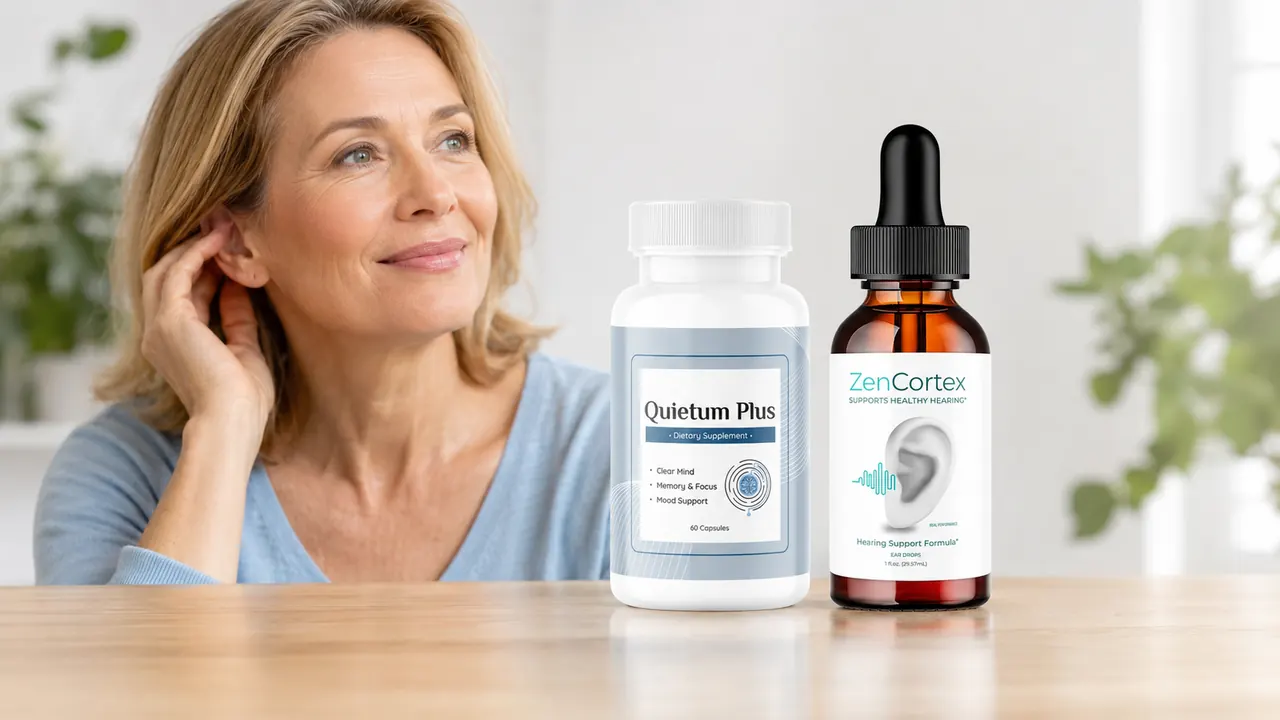
Quietum Plus and ZenCortex are the two most consistently searched tinnitus supplements as of mid-2026. Despite targeting the same primary concern, they approach the biology of tinnitus differently: Quietum Plus from a foundational auditory nutrition angle (vitamins, minerals, and traditional ear-support botanicals), and ZenCortex from a neuro-auditory approach that simultaneously addresses the brain-ear connection, the stress dimension that worsens tinnitus, and the antioxidant protection of central auditory neural tissue.
Neither has been tested as a complete product in large randomised clinical trials — their evidence bases derive from individual ingredient research, which is standard across the supplement category. What differentiates them is the quality, breadth, and direct relevance of their respective ingredient evidence for the specific biology of tinnitus.
Side-by-Side Comparison
| Factor | Quietum Plus | ZenCortex |
|---|---|---|
| Format | Capsule (2 daily) | Liquid drops (1 dropper 2x daily) — sublingual option |
| Primary Approach | Auditory nerve nutrition & circulation | Neuro-auditory + stress-tinnitus + cognitive support |
| Key Ingredients | Vitamins B1/B2/B6/B12, Zinc, Yam, Fenugreek, L-Tyrosine | Grape Seed OPCs, Green Tea EGCG, Panax Ginseng, Capsicum, Maca Root, Chromium |
| Antioxidant Neural Protection | Vitamin-based antioxidants | Strong — Grape Seed OPCs + Green Tea EGCG cross blood-brain barrier |
| Stress-Tinnitus Coverage | Limited — no adaptogens | Meaningful — Panax Ginseng + Maca Root |
| Cochlear Circulation | Moderate via Yam, Fenugreek | Strong — Capsicum vasodilation + Grape Seed vascular support |
| Cognitive Support | L-Tyrosine (modest) | Panax Ginseng + EGCG (meaningful) |
| Nutritional Auditory Foundation | Strong — B vitamins, Zinc directly support auditory nerve | Indirect via ginseng and metabolic support |
| Vegan Friendly | Check current label | Yes — plant-based formula |
| Money-Back Guarantee | 60-day | 60-day |
| Overall Verdict | ✓ Recommended — edges ahead for most users |
Quietum Plus — In-Depth Assessment
Quietum Plus is structured around foundational auditory nutrition. The formula prioritises B-group vitamins — B1 (thiamine), B2 (riboflavin), B6, and B12 — that are known to support auditory nerve cell health and function. Thiamine deficiency in particular is documented to cause hearing disturbances; B12 deficiency is associated with auditory neuropathy and is notably common in adults over 50. Zinc at a tinnitus-relevant dose addresses the finding that zinc deficiency is more prevalent in adults with tinnitus than in the general population, and zinc supplementation in deficient individuals has shown reductions in tinnitus severity in small trials.
The botanical components — yam, fenugreek, and L-Tyrosine — address inner ear circulation and neurotransmitter precursor supply. L-Tyrosine is a precursor to dopamine and norepinephrine, neurotransmitters that modulate the central auditory processing of tinnitus signal perception. This approach is more traditionally structured than ZenCortex's formula and may appeal to users who want recognisable, well-understood ingredients over novel botanical combinations.
Quietum Plus's primary strength is its nutritional foundation — especially for older adults who may have genuine zinc or B vitamin deficiencies contributing to their tinnitus. Its limitation is the absence of meaningful antioxidant coverage for the neural auditory pathways, and no adaptogenic support for the stress-tinnitus relationship that affects a substantial proportion of sufferers.
ZenCortex — In-Depth Assessment
ZenCortex takes a neuro-auditory approach with two distinguishing characteristics. First, its lead antioxidant ingredients — Grape Seed Extract (oligomeric proanthocyanidins) and Green Tea EGCG — are lipophilic compounds that cross the blood-brain barrier, providing antioxidant protection directly to neural auditory tissue including the auditory cortex and central auditory processing pathways. Oxidative stress in central auditory neural tissue is a recognised contributor to tinnitus perception that peripheral ear-focused formulas cannot address.
Second, ZenCortex's inclusion of Panax Ginseng and Maca Root as adaptogens directly targets the stress-tinnitus relationship. Chronic psychological and physiological stress activates the sympathetic nervous system, increases inflammatory cytokine production in neural tissue, and demonstrably worsens tinnitus intensity and perception in sufferers. This relationship is well-documented in tinnitus research, and adaptogens that reduce the physiological stress response provide a genuine tinnitus management benefit through a mechanism that nutritional auditory formulas cannot reach.
ZenCortex's primary strength is its dual-track coverage: peripheral auditory circulation support plus central neuro-auditory and stress pathway management simultaneously. Its liquid dropper format, while requiring an adjusted daily routine, allows sublingual absorption that bypasses some first-pass liver metabolism for faster-acting botanical uptake.
Ingredient Comparison Summary
| Category | Quietum Plus | ZenCortex |
|---|---|---|
| Auditory Nerve Vitamins | Strong B1, B2, B6, B12 | Indirect via ginseng metabolic support |
| Zinc (Inner Ear) | Included tinnitus-relevant dose | Not highlighted |
| Neural Antioxidants | Moderate vitamin-based | Strong Grape Seed OPCs + EGCG BBB-crossing |
| Cochlear Circulation | Moderate | Strong Capsicum + Grape Seed |
| Stress/Adaptogens | None | Panax Ginseng + Maca Root |
| Cognitive Dual-Support | Limited | Meaningful EGCG + Ginseng |
Who Each Product Is Best For
Choose Quietum Plus If:
- You prefer a capsule format over liquid drops
- You suspect nutritional deficiencies — particularly zinc or B vitamins — may be contributing to your hearing concerns
- Your tinnitus is primarily related to noise exposure or age-related auditory nerve changes rather than stress-exacerbated patterns
- You want well-recognised, straightforward nutritional ingredient names over botanical extract combinations
- Budget is a primary consideration and you want a simpler formula
Choose ZenCortex If:
- Your tinnitus is noticeably worse during or after high-stress periods — a very common pattern affecting a large proportion of sufferers
- You experience cognitive symptoms alongside tinnitus: brain fog, difficulty concentrating, reduced mental sharpness
- You want stronger antioxidant protection specifically for the neural auditory pathways within the brain
- You prefer a plant-based, vegan-friendly formula
- You are open to a liquid dropper format and want the sublingual absorption option
- You want the more comprehensive multi-mechanism approach covering both peripheral and central dimensions of tinnitus
💡 The Stress-Tinnitus Connection
Research consistently shows that chronic stress worsens tinnitus severity through measurable neurological mechanisms — sympathetic nervous system activation, inflammatory cytokine elevation, and altered central auditory gain. ZenCortex's adaptogenic component (Panax Ginseng, Maca Root) directly addresses this relationship, which is why it is specifically recommended for users who notice their tinnitus fluctuates significantly with stress levels.
Overall Verdict — 2026
ZenCortex edges ahead for the majority of tinnitus sufferers in 2026. Its stronger neural antioxidant coverage, meaningful adaptogenic stress support, broader multi-mechanism formula, and liquid format with sublingual absorption potential give it a meaningful advantage over Quietum Plus's more traditional nutritional approach. For users with suspected zinc or B vitamin deficiencies, or a strong capsule preference, Quietum Plus remains a credible option. Both carry 60-day money-back guarantees, making either a manageable first trial commitment.
See our breakdown of stress cause ringing in ears to worsen. See our breakdown of high blood pressure cause tinnitus (Ringing ears).
See what we found when we looked into hear ringing in my ears only at night. See what tends to cause hearing loss in one ear:.